
Burslem works with a range of headstone materials, including granite, limestone, sandstone and slate.
Each stone has its own colour, texture and working qualities. The right choice will depend on the memorial design, lettering, location and any churchyard or cemetery regulations.
The material influences the appearance of the memorial, the finish that can be achieved and the inscription methods that may be suitable.
We will usually consider:
Natural stone varies in colour and marking. Photographs can be useful, but viewing a sample often gives a clearer impression.
Granite
Granite headstones can be made in a wide range of colours and finishes. Polished black, blue, red and green granites are commonly used in cemeteries. Lighter grey granite with a matt finish may also be suitable for some churchyards, subject to the local regulations. Granite is a hard stone. Sandblasted lettering, CNC-cut detail and etched designs can all be considered, depending on the surface and design.
Limestone
Limestone headstones generally have a lighter, less reflective appearance. Options may include Portland stone, Purbeck limestone, Nabresina and Irish limestone. Each has a different colour and grain. Limestone is well suited to traditional memorial forms and carved lettering. It is frequently considered for churchyards, although the exact material and finish must still be approved.
Sandstone
Sandstone headstones have a natural grain and warmer colour. Burslem works with Yorkstone from Yorkshire for appropriate commissions. It can be shaped and lettered using traditional methods and often sits comfortably among older churchyard memorials. The appearance and weathering of sandstone vary according to its source and composition.
Slate
Slate headstones have a fine grain and are available in dark grey and green tones. Welsh slate and green slate from Cumbria or Westmorland may be considered. Slate can hold fine carved lettering and may be accepted in some churchyards where other dark stones are restricted. Its suitability will depend on the individual stone, design and local rules.
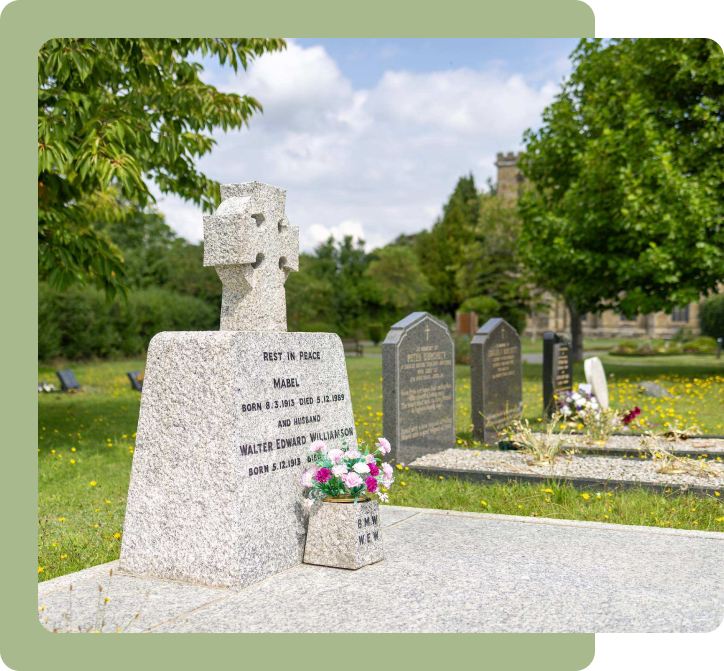
Stone is a natural material. Shade, grain, veining and markings can vary from one block to another. A small sample or screen image should therefore be treated as a guide rather than an exact representation of the finished memorial.
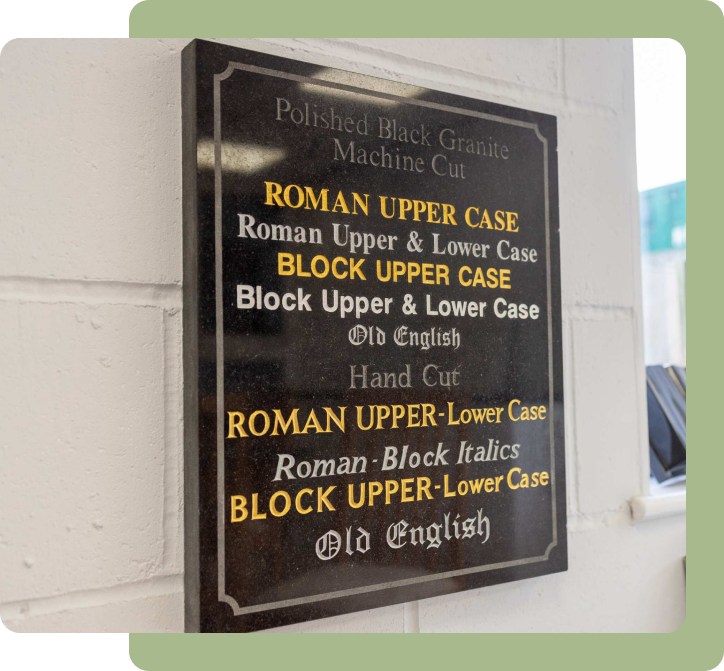
Depending on the material, finishes may include:
The finish affects how the stone reflects light and how the lettering or carving appears. It may also be controlled by the burial authority.
The location of the memorial affects what type of stone and finish will work best.
Granite, slate, limestone and sandstone all behave differently outdoors. Some remain sharper in appearance, while others weather more softly.
Our BRAMM accreditation gives added reassurance that the memorial is made and fitted with proper care.
A particular stone may be chosen for its appearance, working qualities or connection with a place. Burslem has experience with British materials from areas including Dorset, Wales, Yorkshire and Cumbria. We also have established contacts with quarries and primary masonry producers in the UK, Europe and further afield.
For some individual commissions, it may be possible to inspect and select a particular block at the quarry. This depends on the material, source, and scale of the work.
The original material may have weathered, and two stones that appear similar when new may change differently over time. Grain, texture, finish and working properties also need to be considered.
Burslem’s restoration and additional inscription work includes identifying existing materials and advising on a suitable match or alternative.
Clear photographs and the location of the memorial are useful starting points. A site inspection may also be needed.
If you would like to discuss a particular material or compare suitable options, call 01892 750120 or email enquiries@burslem.co.uk.
You are also welcome to visit our showroom by appointment.